
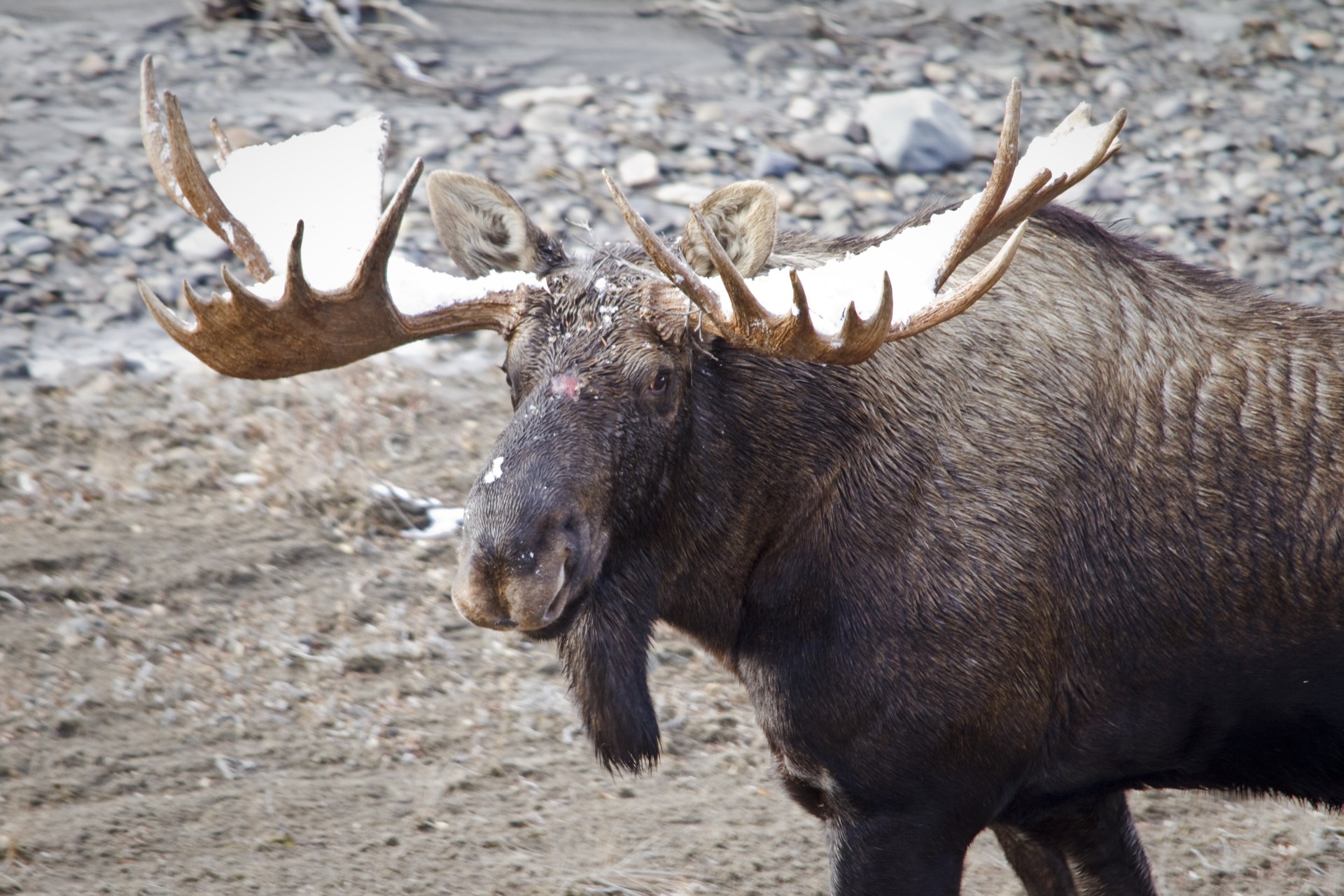
Why a Spotting Scope Is a Moose Hunter’s Secret Weapon
Binoculars find the moose. A spotting scope tells you whether he is worth the stalk.
Picture the scenario that plays out every fall across moose country: you are glassing a far mountainside in Alaska, a burned-over cutblock in British Columbia, or a big bog in Newfoundland, and your binoculars pick up a dark shape feeding at 1,500 yards. Is it a bull? Is he legal? In units with minimum-spread or brow-tine restrictions, the difference between a shooter and a sub-legal bull can come down to a couple of inches of antler at a distance where binoculars — even excellent ones — turn tines into a blur.
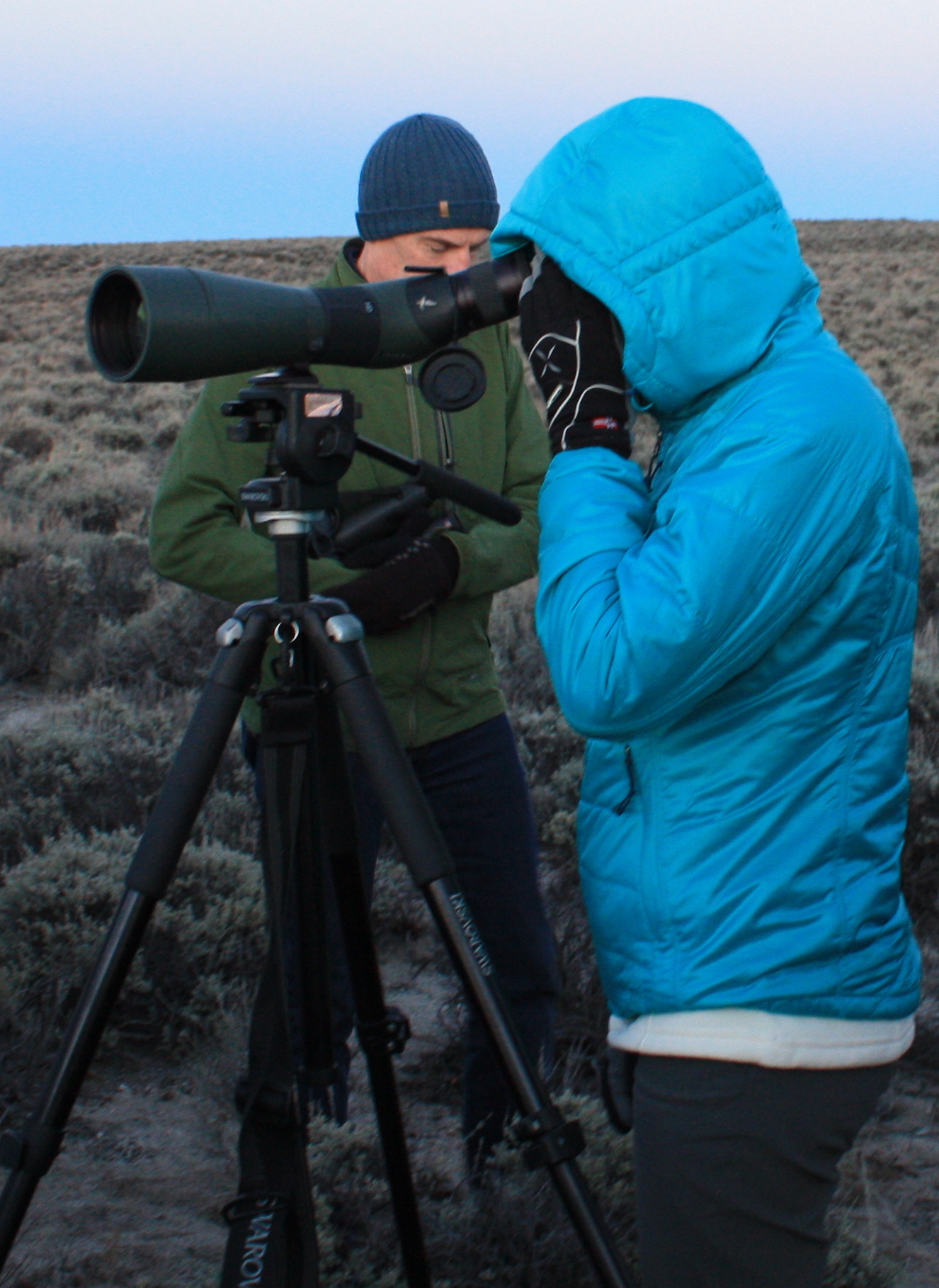
That is the job a spotting scope does. At 40x, 50x, or 60x magnification on a steady tripod, you can count brow tines, estimate spread against the ears, and judge mass at distances where walking in for a closer look would mean spooking the animal or burning half a day on a bull you cannot shoot. A spotter turns “I think that’s a bull” into “that’s a legal bull with at least three brow tines, bedded and feeding, and the wind is right for a stalk.” It is the difference between hunting with information and hunting on hope.
Spotting scopes also earn their weight on the shot-verification side of the equation. After the shot, a spotter lets you watch the bull’s reaction, mark exactly where he was standing, and monitor him without moving — details that matter when you are deciding whether to wait, follow up, or start tracking. And in camp, the same optic doubles as your entertainment: glassing distant ridges for the next morning’s plan is one of the genuine pleasures of a moose hunt.
If you have not built your optics kit yet, read this guide alongside the binocular guide and the rangefinder guide — the three optics work as a system. Binoculars scan and find, the spotting scope judges and confirms, and the rangefinder gives you the exact distance when it is time to shoot. For the full packing list, see the ultimate moose hunting gear checklist.
As an Amazon Associate, Moose Mulitia earns from qualifying purchases.
How to Choose a Spotting Scope for Moose Hunting
Magnification: the low end matters as much as the high end
Spotting scopes are sold by their zoom range — 16-48x, 20-60x, 27-60x — and the instinct is to chase the biggest top number. Resist it, or at least balance it. The high end (45x to 60x) is what counts brow tines and judges spread at a mile, but you will spend far more time at the low end (15x to 30x) actually finding animals and scanning country. A scope that starts at 27x, like the premium models, has a noticeably narrower field of view at its lowest setting than one that starts at 15x or 20x, which makes it slower to pick up a moose stepping out of timber at 800 yards.
The practical sweet spot for moose hunting is a scope with a low end of 15x to 20x and a high end of 45x to 60x. That covers everything from scanning a valley floor to aging a bull across a lake. Whatever you buy, plan to do your serious judging at 40x and above — below that, you are mostly confirming “yes, that’s a moose” rather than evaluating him. And remember that magnification is useless without stability: at 60x, your heartbeat moves the image, which is why a spotting scope is a tripod instrument, not a handheld one.
Objective lens size: 65mm vs. 80/85mm
The objective lens — the big front element — determines how much light the scope gathers, and light is everything at dawn and dusk when moose move. The two standard sizes are 65mm (compact) and 80–85mm (full-size). An 85mm objective gathers roughly 70 percent more light than a 65mm, which translates directly into a brighter, more detailed image in the dim conditions where legal-light judging happens.
The price of that light is weight and bulk. Full-size 85mm scopes run 65 to 78 ounces — four to five pounds before the tripod — while 65mm compacts come in around 50 ounces and 60mm ultralights lower still. If you hunt from a base camp, a boat, an ATV, or a truck, take the 85mm without hesitation; the weight never leaves the vehicle or camp. If you backpack into the mountains or pack a bull out on your back, every ounce matters and a 65mm or 60mm scope starts making serious sense. Be honest about how you actually hunt, not how you imagine hunting, and size the objective accordingly.
Glass quality: ED, HD, UHD, and apochromatic
This is where the money goes, and where cheap scopes reveal themselves. At 20x, almost any modern scope looks decent. At 50x and 60x — the magnifications you bought the scope for — inexpensive glass shows chromatic aberration: purple and green fringing around high-contrast edges like antler tines against sky. That fringing is not just ugly; it obscures exactly the detail you are trying to evaluate.
Extra-low dispersion (ED) glass is the baseline worth paying for; manufacturers label it HD, ED, UHD, or apochromatic depending on brand and tier. Apochromatic designs, found in the premium and upper-mid scopes on this list, bring multiple wavelengths of light to the same focal point and essentially eliminate fringing even at maximum magnification. When you compare scopes, do it at the top of the zoom range in mediocre light — that is where a $1,500 scope earns its premium over a $400 one, and it is also the exact condition in which you will be judging a bull at last light.
Angled vs. straight eyepiece
Spotting scopes come in two body styles. Angled scopes (typically 45 degrees) are the default choice for most moose hunters, and for good reasons: they are more comfortable for long glassing sessions, they let shorter and taller hunters share one tripod without adjusting leg height, and they make it easy to glass uphill — common when you are in the valley looking at bulls on the slopes. They are also lower-profile on a tripod in wind.
Straight scopes point where they look, which makes them faster to aim — you sight down the tube like a rifle — and many hunters prefer them for glassing from a vehicle window mount or for quick target acquisition. The trade-off is neck strain on long sessions and awkwardness when glassing steeply uphill. For dedicated moose glassing from a tripod, angled wins for most hunters. Every scope on this list is available in an angled configuration, which is what the prices and links reflect.
Weight: the packability equation
A spotting scope never travels alone — add a tripod (2 to 4 pounds for a usable one) and a head, and the “glassing system” weighs 6 to 9 pounds. That is a real line item in a backpack hunt. Before you buy, decide where the scope lives: truck and base-camp hunting justifies the big 85mm glass; backpack and fly-in hunts argue for 65mm or smaller. There is no wrong answer, only a mismatch between the optic and the hunt. The most expensive scope in the world does you no good sitting in the truck because you could not face carrying it up the ridge.
Weatherproofing and cold-weather performance
Moose season is wet and cold: coastal Alaska rain, Newfoundland fog, sub-freezing mornings in the Yukon. Your scope must be genuinely waterproof and fogproof — look for argon or nitrogen purging and O-ring seals, which every scope recommended here has. Argon purging (used by Vortex) resists thermal shock slightly better than nitrogen, but either beats an unpurged scope that fogs internally on the first cold morning.
Cold also punishes mechanics: focus wheels stiffen and zoom collars get gritty. Sealed, well-machined focus systems matter more than they appear on a spec sheet. Keep the scope in its neoprene case during transport, wipe the objective before critical glassing, and never breathe on the eyepiece to clear frost — the moisture refreezes. A retractable sunshade, standard on most of these scopes, doubles as rain protection for the objective.
Don’t forget the tripod
A $1,500 scope on a $40 tripod performs like a $40 scope. Budget for a tripod and head rated for at least twice your scope’s weight, with a smooth pan head rather than a ball head — you will be tracking slowly moving animals, not locking onto a static landscape. Carbon fiber saves meaningful weight if you backpack; aluminum is fine from a vehicle or camp. Arca-Swiss compatibility (built into several scopes below) lets the scope clamp directly to modern tripod heads with no adapter plate, which is one less thing to lose in the dark. If you are assembling the whole kit at once, the gear checklist covers tripods and the rest of the glassing system.
The Best Spotting Scopes for Moose Hunting in 2026
Best Overall: Vortex Razor HD 27-60×85 (Angled)
The Razor HD is the scope serious western hunters measure everything else against, and in moose country it earns that reputation daily. The apochromatic HD optical system holds detail together at 50x and 60x where lesser glass falls apart into fringing — and 50x-plus is exactly where you live when you are counting brow tines on a bull across a valley. The 85mm objective pulls in the light needed for genuine last-light glassing, the first and last minutes of legal shooting time when the biggest bulls tend to move.
The 27x floor is higher than the 20x or 15x floors on the other scopes here, which narrows the field of view for fast scanning — the one real compromise. In practice, most hunters pair the Razor with quality binoculars for the finding work and let the spotter do what it does best: intensive, high-magnification evaluation. The magnesium body is fully waterproof, fogproof, and shockproof, the focus system is precise enough for fine work at 60x, and the Arca-Swiss-compatible foot clamps straight to a modern tripod head with no adapter plate to forget at camp.
At around $1,590 street, it is a serious investment — but it is also the last spotting scope most hunters will ever need to buy, backed by Vortex’s unconditional VIP warranty: repaired or replaced, no receipt, no questions, no time limit. If you hunt moose country every year and judge bulls at long range, this is the buy-once answer. It pairs naturally with a premium rifle scope and a full ballistic rangefinder for a complete long-range system.
Specs: 27-60x85mm · apochromatic HD glass · 65.6 oz · Arca-Swiss direct mount · argon purged, waterproof/fogproof · VIP unconditional warranty
Pros: class-leading resolution at maximum magnification; huge 85mm objective for low light; direct Arca-Swiss mounting; best warranty in the business.
Cons: 27x minimum magnification narrows the scanning field; 65.6 oz plus tripod is a commitment on backpack hunts; premium price.
Best Value: Athlon Ares G2 UHD 20-60×85 (Angled)
The Ares G2 UHD is the scope that made the $1,500 tier nervous. Its UHD apochromatic lens system delivers the kind of fringe-free, high-contrast image at 60x that used to require a four-figure budget, and side-by-side with scopes costing several hundred dollars more, it trades blows honestly. The 20x low end gives you a wider, more useful scanning field than the Razor’s 27x floor, so it works better as a standalone glassing tool when you want to find and judge with one optic.
Athlon backs the glass with serious coatings: ESP dielectric prism coatings rated above 99 percent light reflectivity, fully multi-coated lenses, and an XPL protective layer on exterior glass that shrugs off oil, dirt, and scratches — the abuse a scope takes riding in a bush plane or bouncing down a logging road. The aluminum-alloy chassis is argon purged for waterproof, fogproof performance, and at 70 ounces it is actually lighter than the Leupold SX-4 at the same 85mm objective size.
The honest trade-offs: Athlon’s dealer network and resale market are thinner than Vortex’s or Leupold’s, and the field of view at 60x is on the tight side. But at around $900 street — roughly $700 less than the Razor — you are getting genuine apochromatic performance for the price of a mid-range scope. For the hunter who wants premium-tier judging ability without the premium-tier invoice, this is the smartest money on the list. Athlon covers it with a lifetime warranty.
Specs: 20-60x85mm · UHD apochromatic glass · ESP dielectric coatings · 70 oz · 16.9 in · argon purged · lifetime warranty
Pros: apochromatic image quality near premium tier; wide 20x low end for scanning; lighter than competing 85mm scopes; outstanding price-to-performance.
Cons: tighter field of view at 60x; smaller dealer network and weaker resale than Vortex/Leupold; 70 oz is still a full-size load.
Best Mid-Range All-Rounder: Leupold SX-4 Pro Guide HD Gen 2 20-60×85 (Angled)
Leupold’s SX-4 Pro Guide HD Gen 2 is the working guide’s scope: built to be used hard, in bad weather, for years, and backed by a company whose lifetime guarantee is a genuine promise, not marketing copy. The Twilight Max HD Light Management System is the headline feature — engineered to add usable minutes at dawn and dusk by maximizing transmission and killing glare — and those fringe minutes are precisely when moose are on their feet and legal light is expiring.
The 20-60x zoom range through the 85mm objective is the versatile standard this whole category is judged by: wide enough at 20x to scan efficiently, powerful enough at 60x to evaluate antler detail at extreme range. The Gen 2 updates bring DiamondCoat 2 exterior lens protection (Leupold’s hardest abrasion-resistant coating) and Guard-ion hydrophobic coating that sheds water and dirt — real advantages in coastal rain and wet snow. The angled, rotating eyepiece lets you glass comfortably uphill without craning your neck, and the oversized eyepiece with generous eye relief stays comfortable through multi-hour glassing sessions.
At 78.2 ounces it is the heaviest scope on this list, so backpack hunters should think hard — but for base-camp, boat, and vehicle-based moose hunting, the weight never matters and the optical performance per dollar is excellent at around $1,000 street. If your moose hunting involves long sits glassing big country in rough weather, the SX-4 is built exactly for that.
Specs: 20-60x85mm · Twilight Max HD · DiamondCoat 2 + Guard-ion · 78.2 oz · 17.7 in · magnesium body, waterproof/fogproof · lifetime guarantee
Pros: superb low-light system for dawn/dusk glassing; extremely rugged magnesium build; comfortable oversized eyepiece; lifetime guarantee.
Cons: heaviest scope here at 78.2 oz — a real penalty on pack-ins; long close-focus distance limits versatility off the mountain.
Best Budget: Vortex Diamondback HD 16-48×65 (Angled)
Not every moose hunter needs — or can justify — a $1,500 spotter, and the Diamondback HD is proof that $400 still buys a genuinely useful judging tool. The redesigned HD optical system is a real step up from the old Diamondback: noticeably better resolution, reduced chromatic aberration, and stronger low-light performance, right when you need it. The 16-48x zoom range is honest about what it is — 48x tops out below the 60x of the bigger scopes, but 48x on a steady tripod still resolves brow tines and spread at the distances where most moose are actually judged.
Where the Diamondback HD really shines is portability. At around 50 ounces and just over 14 inches, it is a full pound-plus lighter than the 85mm scopes, and the 16x low end gives the widest scanning field on this list — genuinely useful for picking apart timber edges and willow flats. The helical focus wheel is fast and snag-free, the argon-purged body is fully waterproof and fogproof, ArmorTek coating protects the exterior lenses, and it is Arca-Swiss compatible for direct tripod mounting.
And then there is the warranty: the same unconditional VIP warranty as the flagship Razor. On a budget optic that will ride in trucks, boats, and bush planes, that warranty is worth real money. At around $400 street (against a $600 MSRP), the Diamondback HD 16-48×65 is the easy recommendation for a first spotting scope, a backup scope, or a weight-conscious hunter who accepts 48x as enough — which, for most moose judging, it is.
Specs: 16-48x65mm · HD optical system · ~50 oz · 14.25 in · helical focus · argon purged · Arca-Swiss compatible · VIP unconditional warranty
Pros: outstanding value; lightest full-featured scope here; widest low-end field of view; same VIP warranty as scopes costing 4x more.
Cons: 48x maximum and 65mm objective give up low-light reach and extreme-range detail to the 85mm scopes; some fringing at maximum zoom.
Best Compact for Backpack Hunts: Leupold SX-2 Alpine HD Gen 2 20-60×60 (Angled)
Some moose hunts are measured in vertical feet, and on those hunts the scope that comes along beats the scope that stays in the truck. The SX-2 Alpine HD Gen 2 is a genuine backpacking spotter: a 60mm objective in a 14.4-inch body that disappears into a pack lid, yet it still delivers a full 20-60x zoom range — the same top-end magnification as the big 85mm scopes. That combination is rare at this price and exactly what a mountain moose hunter needs.
Leupold does not treat it as a toy version of the big scopes: it gets HD glass, Leupold’s lens coatings, a fully waterproof and fogproof build, and both 1/4-20 and Arca-Swiss mounting built in, all backed by the lifetime guarantee. The physics trade-off is honest and unavoidable — a 60mm objective gathers less light than an 85mm, so in the dimmest conditions at high magnification the image goes darker sooner. Manage expectations accordingly: this is a scope for judging bulls in good light and the bright shoulders of the day, and it is superb at that job for its size.
At around $400 street, it costs the same as the Vortex Diamondback HD but serves a different hunter: choose the Diamondback for the brighter 65mm objective and wider low end, or the SX-2 Alpine when minimum size and weight are the deciding factors. For fly-in, backpack, and mountain moose hunts where every ounce is negotiated, the Alpine is the right call.
Specs: 20-60x60mm · HD glass · ~14.4 in compact body · 1/4-20 + Arca-Swiss mounting · waterproof/fogproof · lifetime guarantee
Pros: true backpack size and weight with full 20-60x range; HD glass above its price class; dual mounting options; lifetime guarantee.
Cons: 60mm objective trails the 85mm scopes in low light, especially at high magnification; small objective shows its limits at last light.
Spotting Scope Comparison Table
| Model | Magnification | Objective | Weight | Street Price | Best For |
|---|---|---|---|---|---|
| Vortex Razor HD 27-60×85 | 27-60x | 85mm | 65.6 oz | ~$1,590 | Best overall; serious long-range judging |
| Athlon Ares G2 UHD 20-60×85 | 20-60x | 85mm | 70 oz | ~$900 | Best value; near-premium glass for less |
| Leupold SX-4 Pro Guide HD Gen 2 20-60×85 | 20-60x | 85mm | 78.2 oz | ~$1,000 | Best mid-range all-rounder; low-light specialist |
| Vortex Diamondback HD 16-48×65 | 16-48x | 65mm | ~50 oz | ~$400 | Best budget; first scope or lightweight kit |
| Leupold SX-2 Alpine HD Gen 2 20-60×60 | 20-60x | 60mm | Compact | ~$400 | Best compact; backpack and fly-in hunts |
Spotting Scope FAQ for Moose Hunters
Do I need a spotting scope if I already own good binoculars?
They do different jobs. Binoculars are for finding — wide field of view, two-eyed comfort, handheld scanning. A spotting scope is for judging — high magnification on a tripod that resolves the antler detail binoculars cannot. If you hunt areas with antler restrictions or you want to avoid stalking sub-legal bulls, a spotter pays for itself in saved stalks. If you hunt dense timber where shots happen under 100 yards, binoculars alone may genuinely be enough.
Angled or straight — which should a moose hunter buy?
Angled, for most hunters. Long glassing sessions are far more comfortable with a 45-degree eyepiece, sharing one tripod between hunters of different heights is easier, and glassing uphill — constant in moose country — is natural instead of neck-breaking. Choose straight if you primarily glass from a vehicle window mount or you value the fastest possible target acquisition. All five scopes above are linked in their angled versions.
What magnification do I actually need to judge a bull?
Plan on 40x minimum for serious antler evaluation — counting brow tines and estimating spread against the ears. Below 40x you are confirming species and sex, not legality. That is why the top end of the zoom range matters more than marketing suggests: a scope that maxes at 48x can do the job, but a 60x scope does it with margin at longer distances and in worse light.
Can I use a spotting scope for the shot, like a rifle scope?
No — a spotting scope is an observation instrument, not an aiming device. It has no reticle and is not built to withstand recoil. Use the spotter to judge the bull and pick your shooting position, then make the shot through your rifle scope after confirming the distance with your rangefinder. After the shot, the spotter goes back to work watching the bull’s reaction.
How much should I spend on the tripod?
Enough that you never think about it. A workable tripod and pan head for a full-size spotter starts around $150–$250; carbon fiber models that save real pack weight run $300 and up. The non-negotiables: a weight rating at least double your scope’s weight, a smooth pan head (not a ball head), and twist or flip leg locks you can operate with gloves. A shaky tripod turns a $1,500 scope into a $150 scope at 60x.
Will a spotting scope really help me judge legal bulls?
Yes — that is its primary hunting purpose. In jurisdictions with spread minimums, brow-tine counts, or point restrictions, the decision to stalk or pass often hinges on inches of antler at distances beyond a mile. A quality spotter on a solid tripod resolves that detail; binoculars cannot. Pair the skill with the techniques in the field-judging guide — the scope gives you the image, and the guide teaches you what to look for in it.
The Bottom Line
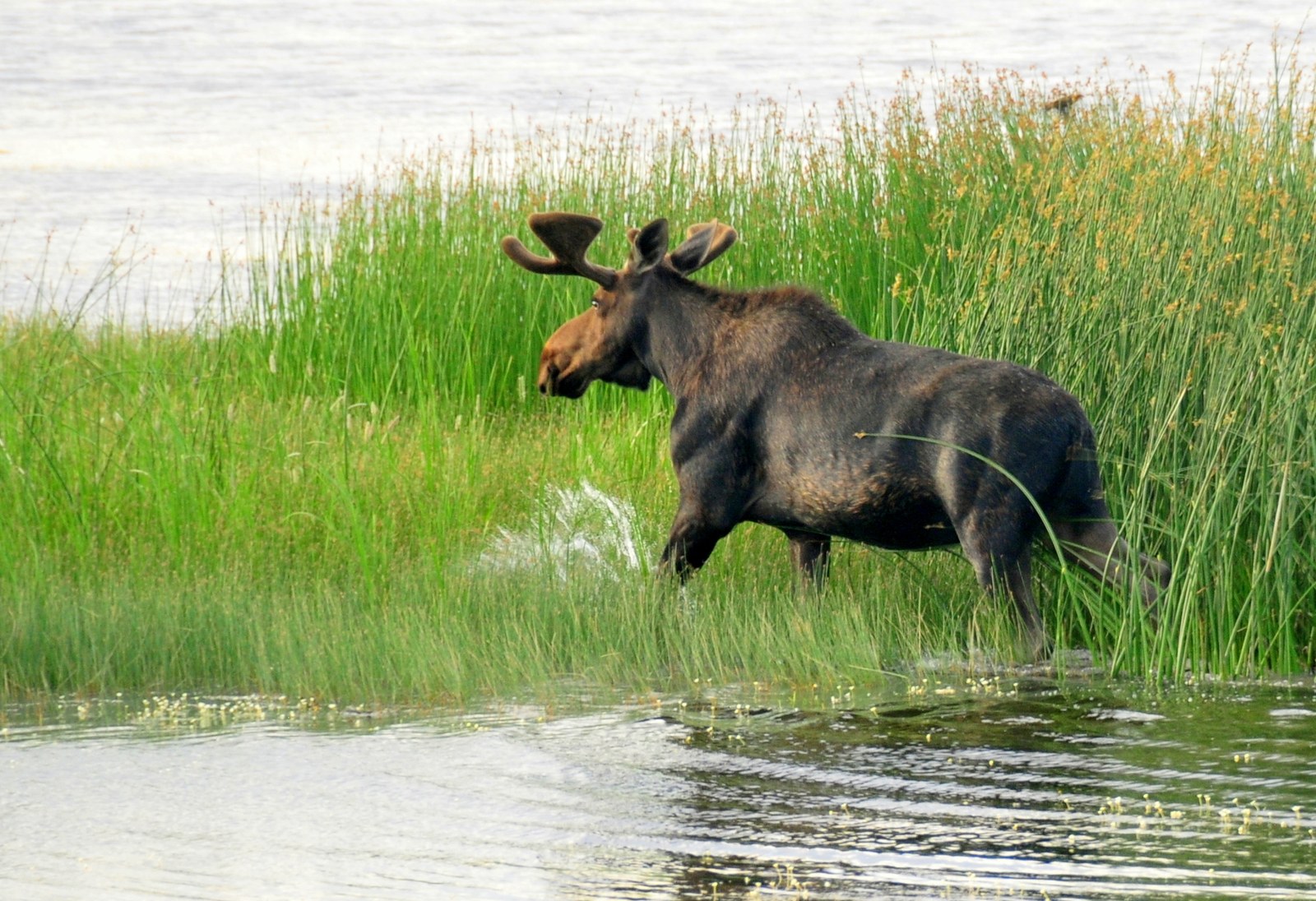
A spotting scope is the optic that turns glassing from recreation into intelligence. The Vortex Razor HD 27-60×85 is the best overall choice for the dedicated moose hunter — unmatched resolving power at the magnifications where bulls get judged, with a warranty that outlasts everything. The Athlon Ares G2 UHD delivers startlingly close performance for around $900 and is the value play of the decade. The Leupold SX-4 Pro Guide HD Gen 2 is the rugged low-light workhorse for hunters who glass dawn to dusk in rough weather.
On a budget, the Vortex Diamondback HD 16-48×65 puts a genuinely capable judging tool in your pack for around $400, and the Leupold SX-2 Alpine HD Gen 2 is the answer when the hunt is measured in vertical feet. Whichever you choose, mount it on a tripod worthy of it, learn your unit’s antler regulations cold, and practice judging bulls all summer — so that when the moment comes in the fall, the scope confirms what your eye already knows. New to moose hunting entirely? Start with Moose Hunting 101, then build your optics kit from there.
Running a spotter already, or deciding between two of these? Join the conversation with fellow moose hunters at https://www.facebook.com/profile.php?id=100066742959434 — we would love to hear what is riding on your tripod.