
Why Field Judging Is a Skill, Not a Guess
Calling a bull into range is only half the hunt. The other half — the half that decides whether you fill your tag legally, fill it with a trophy, or spend the rest of the trip regretting a trigger pull — happens in the seconds before the shot, when you have to judge the animal standing in front of you.
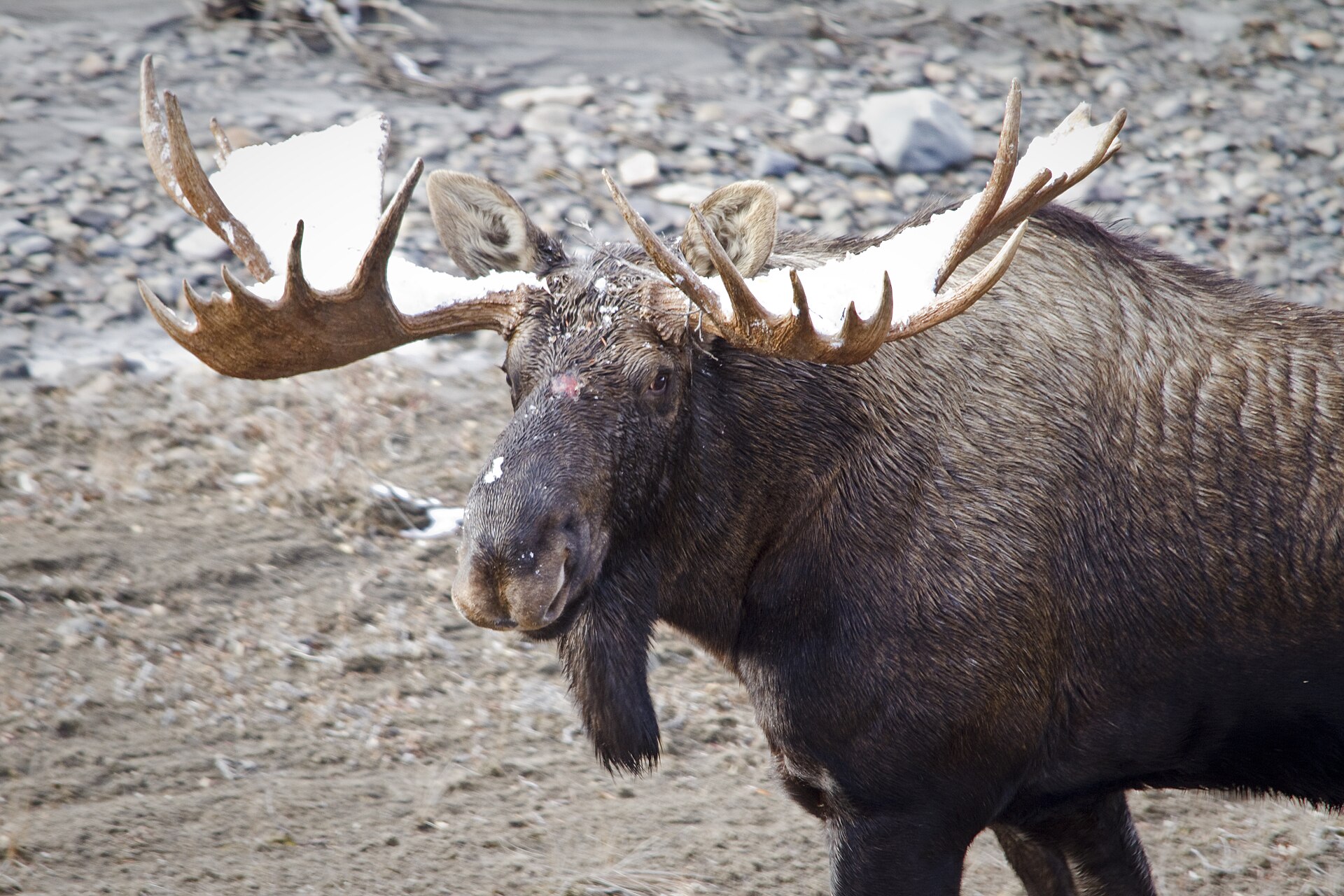
Field judging a bull moose means reading his antlers fast and accurately: spread, palm structure, and brow tines. In states and provinces with antler restrictions, it’s not a trophy-hunting luxury — it’s a legal requirement. Alaska’s famous spike/fork, 50-inch, and brow-tine rules mean a wrong call can turn a hunt of a lifetime into a citation, a confiscated animal, and a lost tag. The 2026 Unit 1D moose season closed early by emergency order after 24 bulls were reported — nine legal as spike/fork, nine legal on brow tines, five legal on a 50-inch spread, and one sublegal (Alaska Department of Fish and Game). One hunter in that group learned the hard way that “close enough” doesn’t count.
This guide teaches you how to read a bull like a wildlife biologist reads him: what to look at, in what order, and which shortcuts experienced hunters trust. And because this is Moose Mulitia, everything here is practical, regulation-grounded, and built for the hunter glassing a bull at 200 yards with their heart pounding.
The Anatomy of a Bull’s Rack
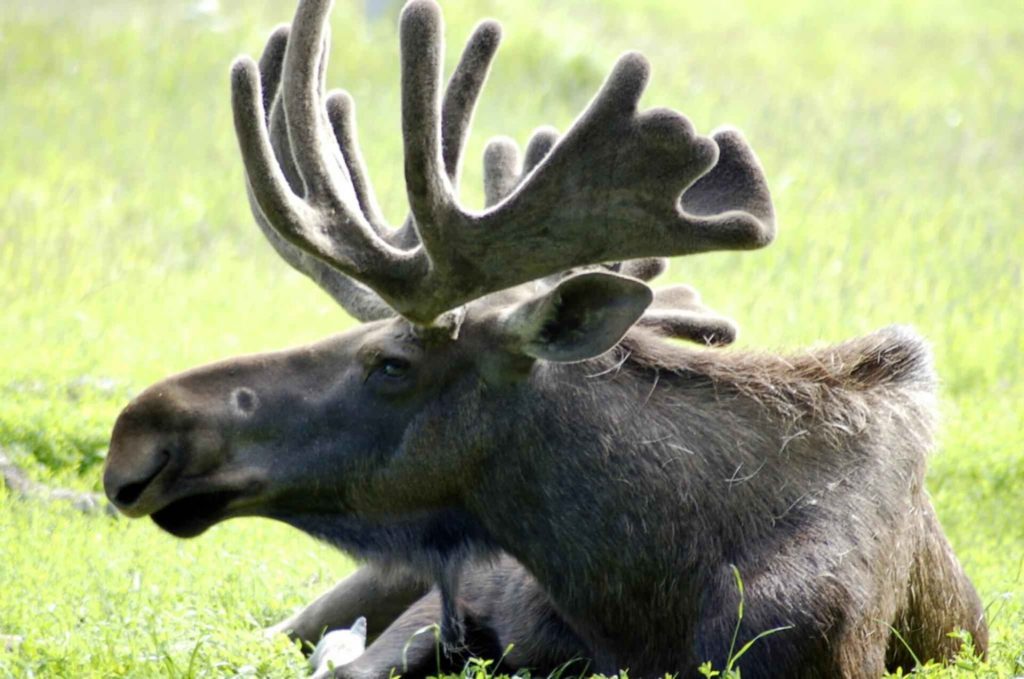
Before you can judge anything, you need the vocabulary. Moose antlers have distinct parts, and the legal definitions in many jurisdictions turn on exactly which part a tine grows from.
Bases (burrs). The knobby, button-like mass where each antler rises from the skull. On a big bull they’re massive and close together.
Beams. The section of antler between the base and the palms. On mature bulls the beams are thick and often droop outward before rising into the palms — massive, drooping beams are one of the best quick indicators of an older, heavier-racked bull.
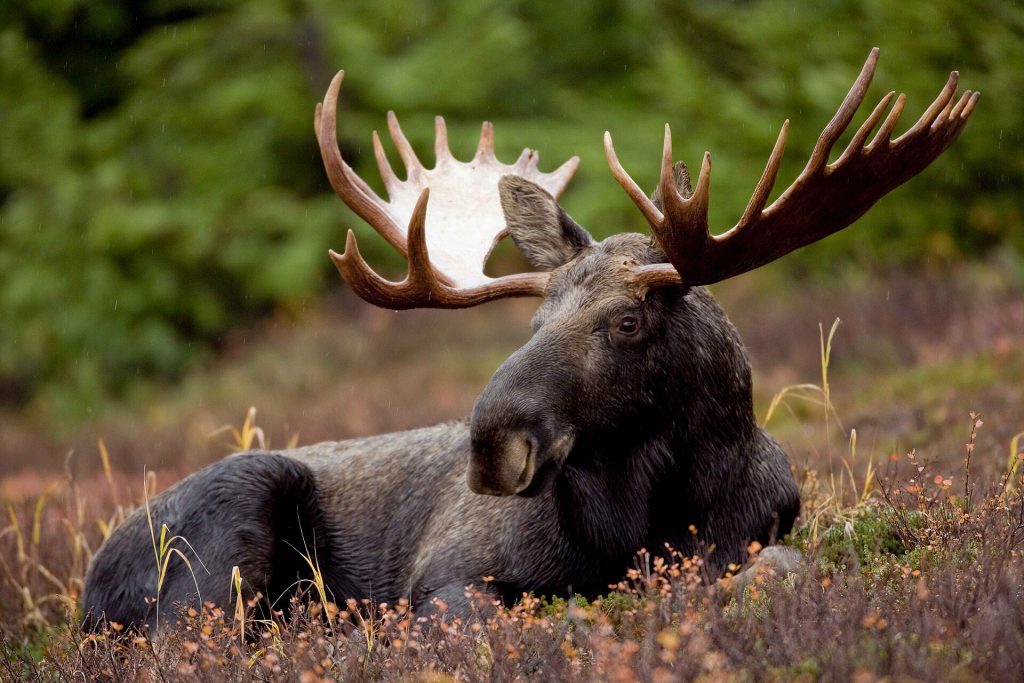
Brow palm. The lower, smaller palmate section on each antler, closest to the face. This is where the brow tines grow.
Main palm (paddle). The large, broad upper palmate section that carries the top points. The main palms are what most people picture when they think of a moose rack.
The bay. The wide indentation or gap separating the brow palm from the main palm. This matters enormously: by the Alaska Department of Fish and Game’s definition, a tine originating in or after this bay is not a brow tine. Many a heated camp debate — and some citations — have turned on exactly where the bay ends.
Points vs. tines. In everyday language hunters use the two words interchangeably, but in Alaska regulations they’re defined the same way: an antler projection at least one inch long and longer than it is wide, with the width measured one inch or more from the tip. Projections on the brow palm are brow tines; projections on the main palm are points. And here’s a detail that saves people trouble: a projection originating within two inches of the antler’s base and less than three inches long doesn’t count as a brow tine or point at all.
Memorize that anatomy. When you glass a bull, your eyes should go: bases, beams, brow palm, bay, main palm — in that order.
Step 1: Know Your Legal Target Before You Leave Camp
Field judging is always relative to a standard, and the standard depends on where you’re hunting. Most of North America is any-bull country: if it’s a legal bull, it’s legal. Alaska is the big exception, with antler restrictions in many game management units. The typical Alaska rule reads: a legal bull has a spike or fork antler, OR a 50-inch or greater antler spread, OR a set number of brow tines on at least one side (usually three or four, depending on the unit).
Know your unit’s exact rule before opening day. Some units require four brow tines; others require three. Some hunts are spike/fork only. Seasons and legal definitions can change by emergency order — the ADFG hunts page lists current legal-animal definitions for each hunt (example from the 2026 regulatory year). Our Moose Hunting Regulations Across North America guide breaks down the tag and antler-restriction systems continent-wide, and our Alaska guide covers the spike-fork / 50-inch / brow-tine system in detail.
The golden rule of antler-restriction hunting, repeated by every experienced Alaska hunter: when in doubt, don’t shoot. A marginal bull you pass on is a story; a sublegal bull you shoot is a crime.
Step 2: Judge the Spread
Spread — the greatest distance across the antlers, measured at the widest point — is the number everyone talks about and the hardest to judge. A 50-inch spread is the magic number in Alaska, and estimating it at 150-plus yards, on a moving animal, through heat shimmer, is genuinely difficult. Here’s how hunters who do it well approach the problem.
Get a head-on look
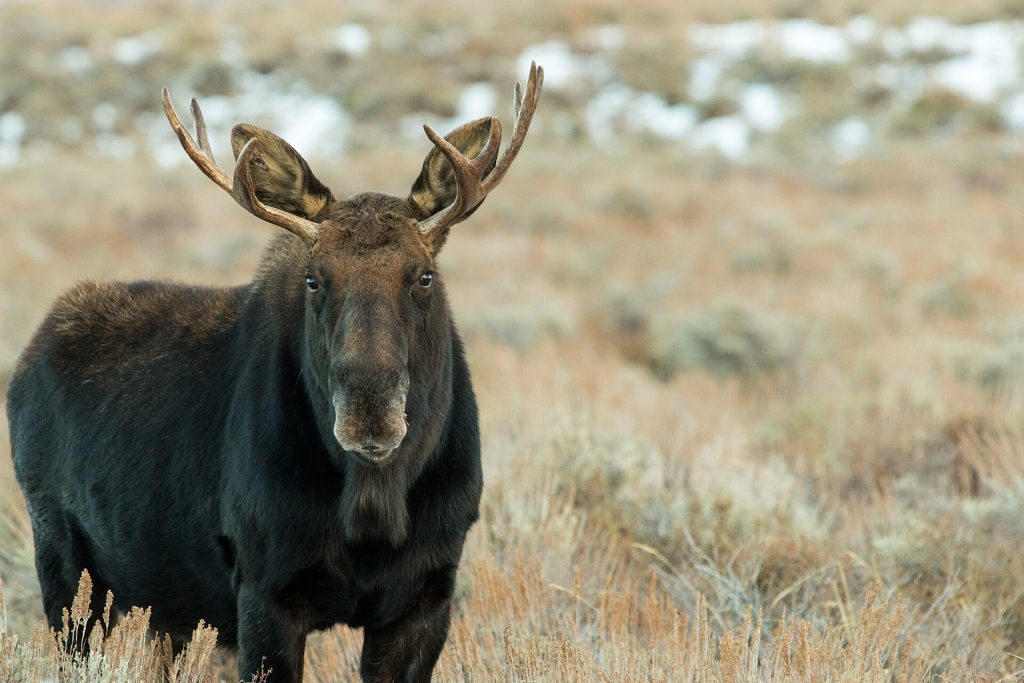
You cannot judge spread from the side. A bull quartering toward you or standing broadside can look 10 inches wider or narrower than he is. The only honest view is straight-on: the bull facing you, or facing directly away. If he won’t give you that look, wait. Patience here is cheaper than a ticket.
Use the reference points built into every moose
Moose come with their own measuring sticks, and experienced judges lean on three of them:
- Antler bases. On most moose, the distance between the antler bases is about 10 inches. Frame the spread as a multiple of that gap.
- Ears. A bull’s ear-tip to ear-tip spread, with ears in the normal alert position, is roughly 20 inches. Two ear-spans plus a margin gets you into the neighborhood of 50 inches.
- The base-to-base multiple. Some hunters use a tighter figure — about 7 to 7.5 inches between bases on a big bull — and multiply it out: three of those units to each side of center puts you right around 50 inches. Whichever constant you use, pick one and calibrate it against racks you can verify.
None of these is foolproof. They’re starting points, not tape measures. But stacked together — bases plus ears plus overall impression — they catch mistakes.
Read the mass, not just the width
Width is only one dimension of a big bull. Several visual cues correlate with mature, heavy antlers:
- Beams that hang below the skull cap. When the main beams droop visibly below the top of the head before rising into the palms, you’re looking at a heavy, mature rack.
- Palm length vs. head length. Compare the length of the main palm to the distance from the tip of the bull’s nose to the top of his head. When the palm is longer, you’re looking at a large bull.
- Palm direction. Palms that grow more up than out can look narrower than they measure — a trap for the unwary. A bull with upright, cupped palms may be wider than he appears.
When the bull won’t give you the look
Sometimes the bull cooperates and sometimes he doesn’t. If he keeps quartering away or moving through timber, resist the urge to judge on a bad angle — a quartering view can add or subtract 10 inches of apparent spread, and brush hides brow tines. A soft cow call or a light tickle of the antlers together can stop a walking bull and turn him toward you; that’s another reason calling skill and judging skill belong together. If he still won’t pose and you’re in antler-restriction country, the correct call is to let him walk. The bull you can’t judge is the bull you don’t shoot.
Beware the body-size illusion
Big-bodied bulls make their antlers look smaller than they are; small-bodied bulls make modest racks look big. Experienced hunters have shot bulls they estimated at 45 inches and taped them at 60 — and the reverse happens too, which is the dangerous direction. Judge the antlers against the head, not the body.
The optics trick: mil-dots and rangefinders
If your scope has a mil-dot or MOA reticle and you carry a rangefinder, you can estimate spread with real math. The formula: range in yards × mils measured ÷ 27.77 = size in inches. As a quick reference: at 138 yards, 10 mils equals exactly 50 inches; at 69 yards, 10 mils equals 25 inches. Some hunters laminate a small range card with these conversions and keep it in their chest rig. A scope with a good reticle is a judging tool as well as a shooting tool — see our rifle scope buyer’s guide for what to look for, and make sure a quality rangefinder is on your gear checklist.
Step 3: Count the Brow Tines
Here’s the open secret of antler-restriction hunting: counting brow tines is easier than judging spread. Spread is estimation; brow tines are counting. Most hunters are far better at counting than at estimating, and in units where the rule is three or four brow tines on one side, a confident count settles the legal question with no guesswork.
To count brow tines correctly, apply the definitions:
- Find the brow palm — the lower palmate section nearest the face.
- Find the bay — the wide indentation separating brow palm from main palm. Only tines emerging from the brow palm itself count. Anything originating in or after the bay is a main-palm point, not a brow tine.
- Apply the one-inch rule — each tine must be at least one inch long and longer than it is wide.
- Count both sides separately — the requirement is typically met on at least one side. A bull that’s 2×4 on brow tines is legal where four are required.
Watch for the traps. Small “nubbin” points between real tines usually don’t meet the one-inch rule. Split or forked tines on the brow palm count as separate tines if each meets the length rule. And a tine that’s really on the beam just past the bay doesn’t count, no matter how tempting it looks through the scope.
In a 50-inch-or-brow-tines unit, many veteran hunters use a simple decision tree: count the brow tines first; only if the count is short do you start estimating spread. If the bull has the tines, the spread question is moot and the shot is clear.
Step 4: Recognize Spike/Fork Bulls
The simplest legal call in Alaska’s restricted units is the young bull: a spike (a single unbranched point on each side) or a fork (one antler with a single fork — two points). Spike/fork bulls are legal in many restricted areas, and identifying one is far easier than judging 50 inches.
Young bulls have tells beyond the antlers: lanky bodies, a grayish cast to the shoulder and neck hair, and an overall awkward, leggy look. A yearling bull with spikes is unmistakable once you’ve seen a few. Don’t let anyone talk you into passing a legal spike/fork because “he’ll be bigger next year” unless that’s your personal trophy standard — in restricted units, they’re often the smart, safe, legal choice, and the meat is excellent.
One caution: be certain it’s actually a spike or fork and not a broken-off larger antler. A bull that shed or broke tines is judged on what’s there, and broken antlers have fooled people. Look for the clean, tapered growth of a young antler versus the blunt, pale stub of a break.
Step 5: Trophy Judging — Beyond Legal
Once legality is settled, the question becomes quality. For the hunter who has one tag and wants to make it count, here’s how experienced trophy judges read a rack:
- Spread classes. In the Lower 48 and eastern Canada, a 40-inch bull is a genuinely good animal; 45-plus is a trophy. In Alaska and the Yukon, the conversation starts at 50 and trophy bulls run 55 to 70 inches, with exceptional bulls exceeding 75 inches of spread.
- Point count. More points generally mean an older, more dominant bull. Count the top points on each main palm as part of your assessment.
- Palm width and mass. Wide, thick palms with heavy bases score well and look the part on the wall. Mass — the sheer beef of the beams and palms — is what separates a good bull from a great one at the same spread.
- Symmetry. Matched sides are the hallmark of a classic trophy rack.
- Boone & Crockett context. The minimum score for the Alaska-Yukon record book is 210 points; the world record moose, taken in Alaska, scored 261 5/8. Knowing the book minimums helps you calibrate what “big” really means.
Remember the calling connection: the whole point of learning to call — our complete moose calling guide — is to bring bulls in close enough to judge well. A bull at 60 yards answering your call is a bull you can count brow tines on. Judging skill and calling skill multiply each other.
How to Get Good: The Practice System
Nobody is born able to call 50 inches at 200 yards. Every good judge built the skill the same way: repetition against verified answers.
- Judge every rack you see. Mounts in lodges, photos online, bulls on trail cameras — guess the spread and the brow-tine count, then check against the real numbers whenever you can. Over time your eye calibrates.
- Watch the ADFG training video. Alaska Fish and Game’s “Is This Bull Legal?” video walks you through more than 20 bulls and forces you to make the shoot/no-shoot call on each. Hunters who’ve used it recommend watching it every fall before the season. It’s the single best training tool for antler-restriction hunting.
- Calibrate your optics. If you plan to use the mil-dot method, verify your reticle’s subtensions and practice the math at the range before the season — not on a live bull.
- Hunt with a judge. If your partner is better at this than you, glass together and compare calls before anyone reaches for a rifle. Two sets of eyes catch what one misses.
The Pre-Shot Checklist
Tape this to your brain for the moment of truth:
- Know the rule. What’s legal in this unit — spike/fork, spread minimum, brow-tine count? Confirm before the season, and check for emergency orders.
- Get the right angle. Head-on (or directly facing away) for spread; a clear side view for brow-tine counting.
- Count first, estimate second. Brow tines are counting — do the easy, certain thing first.
- Stack your references. Bases, ears, beams, palms — don’t rely on a single cue.
- Check yourself against the body-size illusion. Judge antlers against the head, not the body.
- When in doubt, don’t shoot. A passed bull is a story. A sublegal bull is a violation.
Field judging is one of those skills where competence compounds: the better you get, the calmer you are, and the calmer you are, the better you judge. Put in the reps before the season, know your unit’s rules cold, and when that bull steps out, you’ll make the call with confidence instead of hope.
Got a judging story or a photo of a bull you had to make the call on? Share it with the Moose Mulitia community — join us on Facebook and show us your bull.