
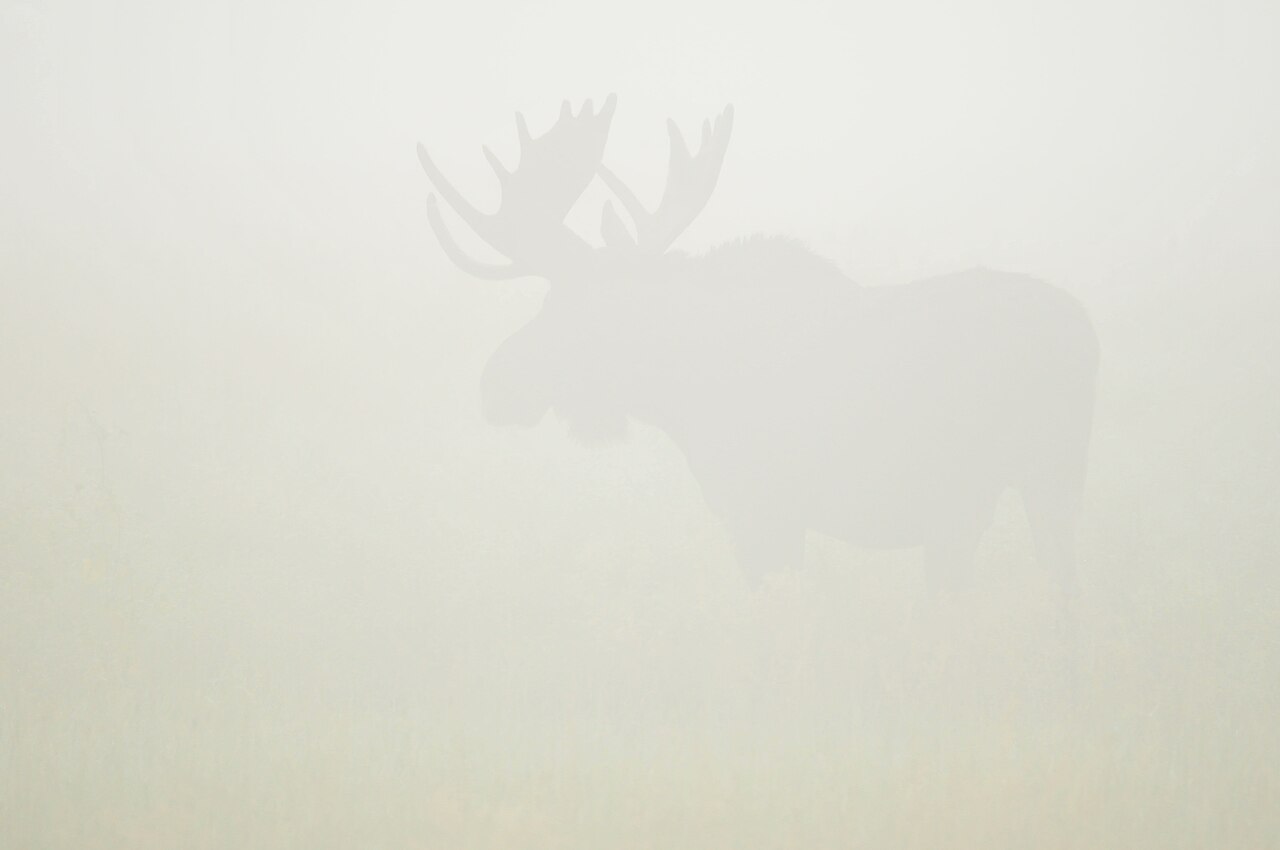
Every fall, tens of thousands of hunters across the Lower 48 put their names into drawings for a few thousand moose permits — and a lucky handful get the phone call, letter, or email that changes their year. Moose hunting south of Canada is a different game from the fly-in adventures of Alaska or the vast boreal forests of the North: here, the hunt begins months before the season, in a lottery application, and for many hunters the tag itself is a once-in-a-lifetime event.
This guide covers every state in the Lower 48 with a moose season — the lottery systems of New England, the preference-point chess of the Rockies, season timing, tactics for big woods versus high country, and what non-residents need to know about costs and logistics. For the continent-wide regulatory picture, see our Moose Hunting Regulations Across North America guide, and if you’re new to the pursuit entirely, start with Moose Hunting 101.
Why the Lower 48 Is a Different Game
In Alaska or much of Canada, a moose hunter’s biggest question is where to go. In the Lower 48, the biggest question is whether you’ll get to go at all.
Three things define moose hunting in the Lower 48:
1. Lotteries and draws, not over-the-counter tags. No Lower 48 state sells a general moose tag over the counter. Every permit is allocated by lottery, draw, or preference-point system, with application deadlines clustered in spring (March through June, depending on the state). Miss the deadline and you wait a full year.
2. Brutal math. Consider the 2026 numbers: Colorado drew 66,000 applicants for 761 licenses. New Hampshire drew 5,914 applicants for 33 permits. Maine — the most generous state in the Lower 48 — issued 3,705 permits against tens of thousands of applications. Drawing a tag is genuinely like winning a small lottery, and hunters routinely apply for a decade or more before drawing.
3. Once-in-a-lifetime rules. Several Rockies states (Idaho, Montana, Utah, Washington) make their moose tags once-in-a-lifetime: harvest a moose and you can never apply again. That single fact reshapes everything — hunters scout harder, hire guides more often, and treat the hunt with a gravity no deer season can match.
One more distinction worth knowing: the Lower 48 holds two moose subspecies. The Northeast (Maine, New Hampshire, Vermont, Minnesota) is home to the eastern moose, while the Rockies states hold the Shiras moose — the smallest of North America’s moose subspecies, but a magnificent animal that thrives in high mountain valleys. Neither approaches the sheer body size of an Alaska-Yukon bull, but a mature Shiras or eastern bull is still a 800- to 1,000-pound animal.
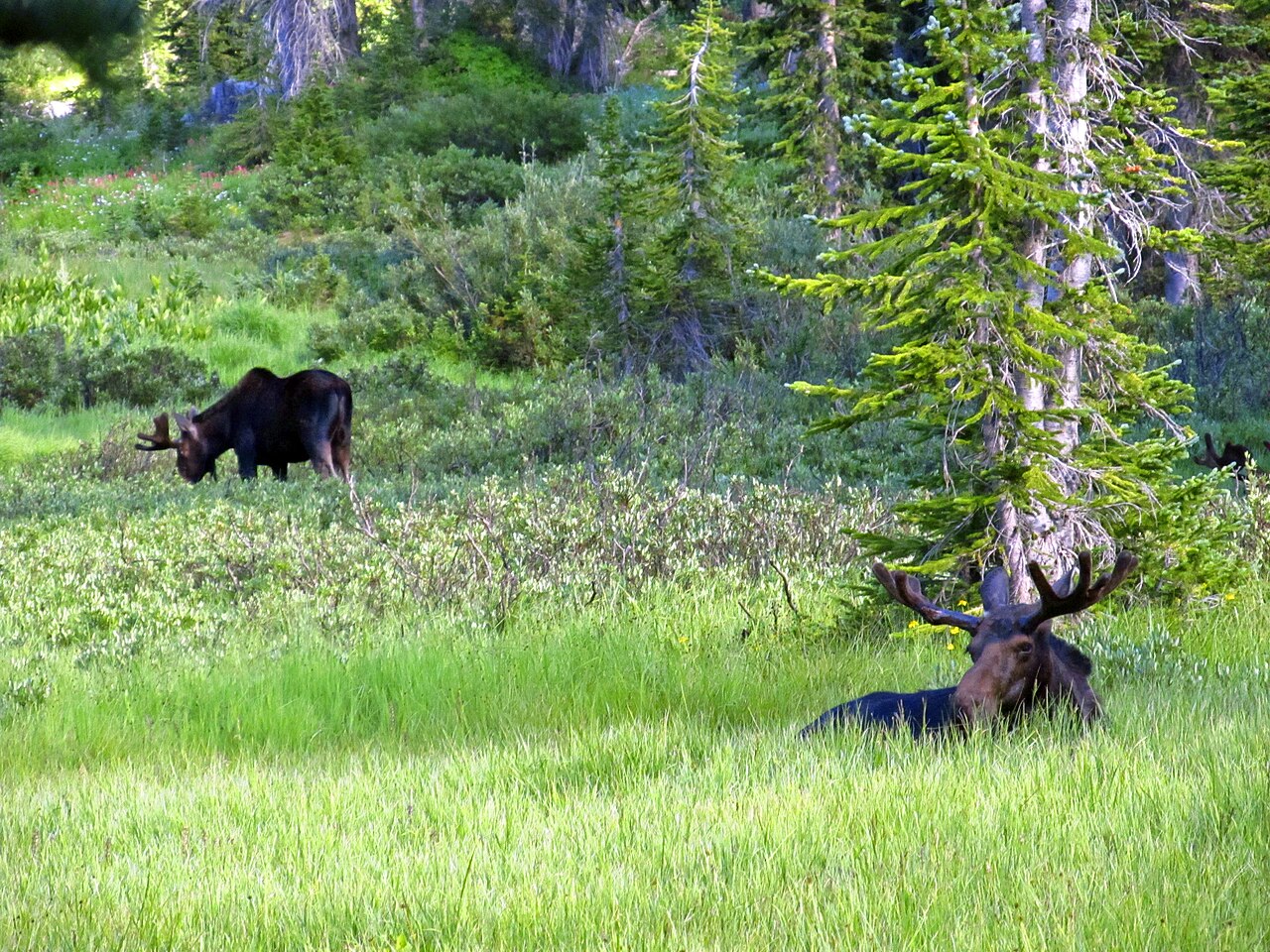
The Northeast: Maine and the New England Lotteries
Maine — The Premier Lower 48 Destination
If one state defines Lower 48 moose hunting, it’s Maine. The Pine Tree State holds the largest moose population in the Lower 48 and issues more permits than all the other Lower 48 states combined — 3,705 permits for 2026, split into 2,645 antlered and 1,060 antlerless, according to the Maine Department of Inland Fisheries and Wildlife (DIF&W).
How the lottery works. Applications open in spring (typically April through mid-May) through Maine DIF&W, with the drawing held in June. Applicants rank up to 10 Wildlife Management Districts (WMDs) in order of preference. Critically, permits are drawn from separate pools for residents and non-residents — and the split heavily favors Mainers. For 2026, roughly 90% of permits went to residents, about 8% to non-residents, and 2% to registered lodges. Before applying, non-residents should check the per-zone allocation table: some zones offer zero non-resident permits for certain seasons, and an application there is a wasted application.
2026 seasons (always confirm current dates with DIF&W, as zones and dates shift annually):
– Bull-only, September 28 – October 3 (WMDs 1–7, 10–13, 15, 18, 19, 27, 28)
– Bull-only, October 12 – 17 (WMDs 1–15, 17–19, 27, 28)
– Antlerless-only, October 26 – 31 (WMDs 1–6, 8)
The September bull season coincides with the peak of the rut — the most exciting week to hunt, and the hardest permits to draw. The October bull season catches the tail of the rut. Bag limit is one moose per year, and either the permit holder or a registered sub-permittee may take the animal, which effectively lets two hunters share one tag’s opportunity.
A note on 2026: DIF&W eliminated the WMD 4 adaptive hunt unit (a five-year research project on moose density and winter ticks), cutting about 400 permits statewide versus 2025. Permit numbers move every year based on helicopter surveys, hunter success, calf recruitment, and winter tick impacts — always check the current year’s allocation before applying.
The Maine experience. The North Woods — millions of acres of commercial timberland in WMDs 1–6 — is classic moose country: regenerating clearcuts, boggy lowlands, and endless logging roads. Much of it is privately owned timber company land open to public hunting, a uniquely New England arrangement. Non-residents commonly hunt with registered Maine guides or book through sporting camps and lodges (some lodges hold their own allocated permits). Calling during the rut is the signature tactic here; our complete guide to moose calling covers the cow calls and bull grunts that work in big timber.
New Hampshire — 33 Tags, Sky-High Demand
New Hampshire’s moose hunt is the definition of exclusivity: for 2026, just 33 permits were drawn from 5,914 applicants, per the NH Fish and Game Department. The published odds tell the story — about 1 in 109 for residents and 1 in 495 for non-residents.
Key details for 2026: the $15 resident / $25 non-resident lottery application was due May 29, with the computerized drawing June 19. Winners hunt a nine-day season, October 17–25, assigned to one of eight Wildlife Management Units, mostly in the North Country. A bonus-point system rewards consecutive applicants — each year you apply and lose earns a point that multiplies your chances. Winners may hunt with a sub-permittee and a guide, and every harvested moose must be registered and inspected at a check station, where biologists collect age, health, and tick-load data.
Don’t let the tiny permit count fool you: New Hampshire’s success rates are excellent — 72% in 2025, with 23 moose taken. With only 33 hunters spread across the state’s moose range, those who draw get a quality, low-pressure hunt.
Vermont — A Management Hunt in the Northeast Kingdom
Vermont’s moose hunt exists for a specific biological reason: winter ticks. The state’s moose herd in the Northeast Kingdom (Wildlife Management Unit E, Essex County and surroundings) carries some of the heaviest tick loads in New England, suppressing calf survival. Vermont Fish & Wildlife uses limited hunting to hold densities low enough to break the tick cycle.
For 2026, the Fish and Wildlife Board authorized 85 permits — 65 either-sex and 20 antlerless — all in WMU-E, with an expected harvest of 40–50 animals. Two seasons:
– Archery: October 1–7 (15 permits) — timed for the peak rut, the premier Vermont tag
– Rifle: October 17–25 (nine days, extended from six in past years to give hunters two weekends)
Applications ($10 resident / $25 non-resident) were due June 17, with the drawing July 15. No more than 10% of permits go to non-residents. Vermont runs a bonus-point system, and — important quirk — anyone who held a permit in the past five years is ineligible to apply. Five permits are reserved for military veterans, three for auction, and three for special-opportunity recipients.
Minnesota — Tribal Hunts Only
Minnesota is the cautionary tale of the Lower 48. The state has not held a public moose season since 2012, when the northeastern herd’s decline forced the closure. A public season has not returned.
What remains are tribal hunts: for 2026, the Bois Forte and Grand Portage bands each issued permits for a 15-moose harvest, and the Fond du Lac band for 30, through the 1854 Treaty Authority. The season runs September 15 through December 31 (closing early if band limits are reached), for antlered moose, one per hunting party. These hunts are open to band members only — there is currently no legal path for a non-tribal hunter to hunt moose in Minnesota, though advocacy groups continue pushing legislation to reinstate a small public lottery.
New York — No Season
For completeness: New York does not offer a moose hunting season. The Adirondacks hold a small, recovering moose population that disperses in from New England, but the state manages them as a protected, watchable species — not a game animal. If you’re a New Yorker dreaming of moose, your realistic options are Maine, New Hampshire, or Vermont.
The Rockies: Preference Points and Once-in-a-Lifetime Tags
West of the Great Plains, moose hunting runs on a different operating system: preference and bonus point systems that reward years — sometimes decades — of faithful applications, and in several states, a tag you can only ever draw once.
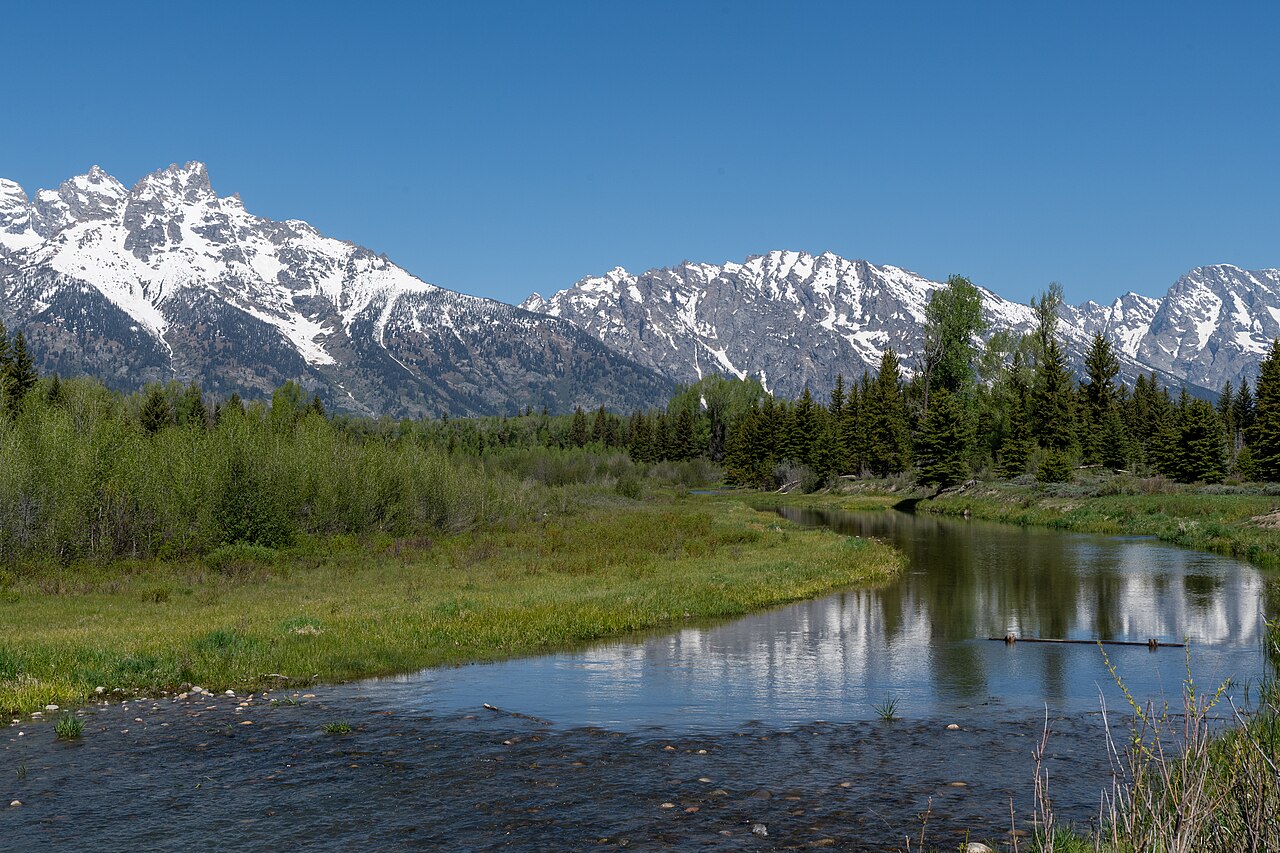
Colorado — The Powerball of Big Game Tags
Colorado’s moose herd — reintroduced starting in the 1970s — has grown to roughly 3,400 animals and is still expanding into new habitat. But demand has exploded faster: 66,000 hunters applied for 761 licenses in 2026 (323 bull, 438 cow), and Colorado Parks and Wildlife’s own big game manager calls the bull tag “essentially the Powerball of big game hunting.”
2026 mechanics: the primary limited-license draw ran March 1 – April 7, with results late May. Moose seasons: archery September 12–30, muzzleloader September 12–20, and rifle October 1–14 (exact dates vary by hunt code — never plan off a statewide summary alone). Colorado uses a preference point system; with demand this extreme, max-point holders wait many years and the random draw is a true longshot. New moose licenses were added in several GMUs for 2026 as the herd grows — check the current Big Game Brochure.
Wyoming — The Preference-Point Grind
Wyoming manages its Shiras moose through a preference point system: roughly 75% of non-resident licenses in each hunt area go to the preference-point draw, 25% to a pure random draw (every applicant is in both). The moose application deadline is April 30, and seasons generally run mid-September through October, varying by hunt area.
The math is sobering — recent drawings have issued only in the low hundreds of moose licenses statewide, with overall draw odds in the low single digits. Non-residents buy preference points (currently $150/year for moose) to climb the ladder, and “point creep” means the threshold rises most years. The consolation: Wyoming offers superb Shiras habitat, generous public land, and a genuine wilderness experience. Many hunters pair years of point-building with an outfitter once they draw — guided 7- to 10-day horseback hunts in the western ranges are the classic Wyoming moose hunt.
Idaho — Best Odds in the West, One Species Only
Idaho may offer the smartest play in the Rockies for a hunter starting from zero points. Moose are managed entirely through controlled hunts (application deadline April 30), and the state enforces a once-in-a-lifetime rule for moose. The strategic twist: you may apply for only one of moose, bighorn sheep, or mountain goat in a given year. Because applicants must choose, Shiras moose odds in top units are frequently better than 1 in 15 — genuinely the best in the West, according to western application services.
Seasons run September 15 – December 1 depending on unit and weapon (Idaho Fish and Game posts exact controlled-hunt dates each March of odd years). Habitat centers on the Panhandle, the Clearwater region, and scattered central-Idaho mountain valleys. Non-residents should budget seriously: the non-resident moose tag runs over $2,700, plus the required non-resident hunting license to apply.
Montana — Bonus Points and a $1,250 Decision
Montana’s moose application deadline is May 1. The state uses a bonus point system (squared — each point enters your name in the draw that many times squared, so points compound fast). Non-residents pay a $50 base license + $10 conservation license + $50 moose application fee up front, with an optional $20 bonus point; if drawn, the moose permit itself costs $1,250.
Montana’s moose is effectively once-in-a-lifetime — harvest one and you’re done applying. Districts span the western third of the state, from the Yaak to the Beartooths. Seasons vary by district but generally fall September through November. Draw odds are long everywhere; the strategy, as everywhere in the Rockies, is to start building points years before you hope to hunt.
Utah — 128 Permits, One Lifetime
Utah’s Division of Wildlife Resources recommended just 113 bull moose and 15 antlerless permits for 2026 — and bull moose is a once-in-a-lifetime hunt. The application period runs March 19 – April 23, with results by May 31. Most bull seasons run September 14 – October 17 across units from the Cache and Uintas to the Wasatch.
Utah uses a bonus-point system (moose code: MOO). The price of admission reflects the scarcity: recent permit fees were $454 for residents and $2,244 for non-residents. Units like the Wasatch and North Slope produce excellent Shiras bulls, but expect to apply for many years — or get very lucky.
Washington — The Quiet Longshot
Washington offers a small number of moose permits in its northeastern corner (the Selkirks and surrounding units near Colville). The state’s rule is once-in-a-lifetime for any-moose permits — draw an any-moose tag and harvest, and you’re permanently done (antlerless-only, master hunter, raffle, and auction permits are exempted). With tiny quotas and a point system, Washington is a classic “throw your name in every year and forget about it” state for residents; non-resident opportunity is minimal.
Season Timing at a Glance (2026)
| State | Application Deadline | Season(s) | Permits (2026) |
|---|---|---|---|
| Maine | ~mid-May | Bull: Sep 28–Oct 3 & Oct 12–17; Antlerless: Oct 26–31 | 3,705 |
| New Hampshire | May 29 | Oct 17–25 | 33 |
| Vermont | Jun 17 | Archery: Oct 1–7; Rifle: Oct 17–25 | 85 |
| Minnesota | — (tribal only) | Sep 15–Dec 31 (tribal) | 60 (tribal) |
| Colorado | Apr 7 | Archery: Sep 12–30; Muzzleloader: Sep 12–20; Rifle: Oct 1–14 | 761 |
| Wyoming | Apr 30 | Mid-Sep–Oct (varies by area) | Low hundreds |
| Idaho | Apr 30 | Sep 15–Dec 1 (varies by unit) | Controlled hunts |
| Montana | May 1 | Sep–Nov (varies by district) | Limited |
| Utah | Apr 23 | Mostly Sep 14–Oct 17 | ~128 |
| Washington | (spring) | Fall (limited units) | Very limited |
| New York | — | No season | — |
Permit numbers and dates change annually — always confirm with the state agency before applying.
Tactics: Big Woods vs. High Country
Lower 48 moose tactics split cleanly along the Mississippi of moose habitat: the dense eastern forests versus the open western mountains.
Calling in the Big Woods (Northeast)
In Maine’s North Woods or New Hampshire’s North Country, you often can’t see 50 yards. Sound is everything. September’s rut is the prime window: cow-in-estrus calls and bull grunts can pull a bull out of thick timber to within bow range. Set up on logging roads, regenerating clearcuts, and bog edges at first and last light; call sparingly, then wait — bulls often circle downwind in silence. Our complete guide to moose calling breaks down the full sequence, from locator calls to the aggressive raking and grunting that triggers a territorial bull.
October hunts (post-rut) demand a different approach: still-hunt slowly through feeding areas, glass clearcuts at dawn, and focus on travel corridors between bedding thickets and food. Success rates stay high because hunter density is so low — New Hampshire’s 72% is no accident.
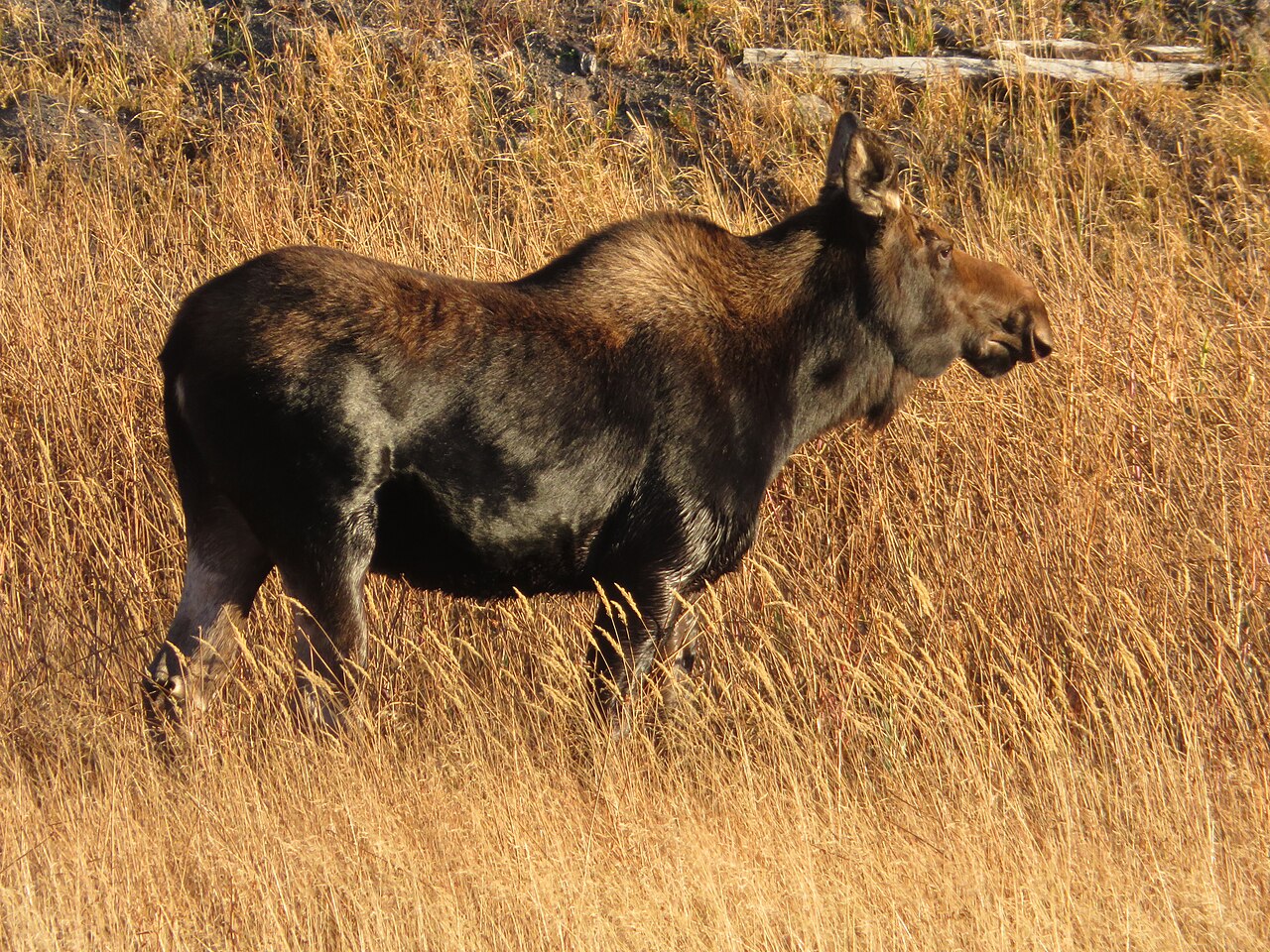
Glassing the High Country (Rockies)
In Colorado, Wyoming, or Utah, the game is elevation and optics. Shiras moose summer in high basins — willow-choked creek bottoms, beaver pond complexes, and subalpine parks between 8,000 and 10,500 feet. The tactic: get high before light, glass systematically with quality binoculars and a spotting scope, and plan a stalk once you locate a bull. September archery and muzzleloader seasons overlap the rut, when calling absolutely works on Shiras bulls too — many western hunters call from a vantage after spotting a bull, rather than blind-calling timber.
October rifle seasons are post-rut: bulls go quiet and nocturnal, feeding heavily to recover. Glassing feeding areas at first light becomes the highest-percentage play, and shots stretch longer across open basins — which is exactly why your rifle scope matters as much as your rifle out West.
Rifles, Calibers & Optics
A Lower 48 moose is still a thousand-pound animal. The working minimum most experienced hunters cite is a .30-06 with premium 180-grain bullets — and in the Rockies, where 300-yard shots across a basin are realistic, the 7mm Rem Mag, .300 Win Mag, and .300 WSM dominate. Our calibers and rifles guide covers the full spectrum, and the optics piece is doubly important for western spot-and-stalk hunting, where dawn/dusk glassing decides the hunt.
Non-Resident Logistics & Costs
Drawing the tag is only the first expense. A realistic non-resident budget:
- Tag/license: the single biggest variable — from a few hundred dollars (Maine, Vermont, New Hampshire permits) to $1,250 (Montana, if drawn), ~$2,244 (Utah), and ~$2,706+ (Idaho). Check current agency fee schedules; they rise most years.
- Preference/bonus points: $150/year (Wyoming moose, non-resident), $20/year (Montana bonus point) — the quiet annual tax of western applications.
- Guide/outfitter (optional but common): $4,000–$8,000+ for a fully outfitted 7–10 day western hunt; Maine sporting camps and guides run less for shorter hunts.
- Travel: flights to Portland (Maine), Denver, Bozeman, or Salt Lake City; rental truck or SUV; fuel for serious backroad miles.
- Meat care and shipping: a bull yields 600+ pounds of boned meat. Coolers, dry ice, and either driving it home or air freight — budget several hundred dollars and plan before the shot. Our gear checklist covers game bags, saws, and the pack-out kit that makes or breaks a remote kill.
Wilderness rules: Wyoming’s designated wilderness areas require non-residents to hunt with a licensed guide or resident companion — factor that into Wyoming planning specifically.
Meat Care: The Thousand-Pound Problem
Every Lower 48 moose season shares one trait: they’re warm. September and early-October temperatures can hit the 60s or 70s, and a downed moose is a race against spoilage. The protocol is non-negotiable: get the hide off, get the quarters into game bags, and get air circulating immediately — ideally hanging in shade. In the backcountry, that means quartering and hanging the same evening; near roads, it means coolers and ice within hours. A moose is the finest wild game meat in North America, but only if you treat the first six hours after the shot as seriously as the shot itself.
The Bottom Line
Moose hunting in the Lower 48 rewards the patient and the persistent. Put your name in every spring — Maine, New Hampshire, Vermont, Colorado, Wyoming, Idaho, Montana, Utah — and build points in the Rockies states year after year. Sooner or later, the draw gods smile, and you’ll be holding a tag that thousands of other hunters would trade a season for.
When that day comes, be ready: know the calling sequences, have your rifle and optic dialed, your pack-out kit packed, and the current regulations read twice. And if this would be your first moose ever, our Moose Hunting 101 walks through the whole first-timer playbook.
Regulations, permit numbers, season dates, and fees change every year. Always verify current details with the official state fish and game agency before applying or hunting.