
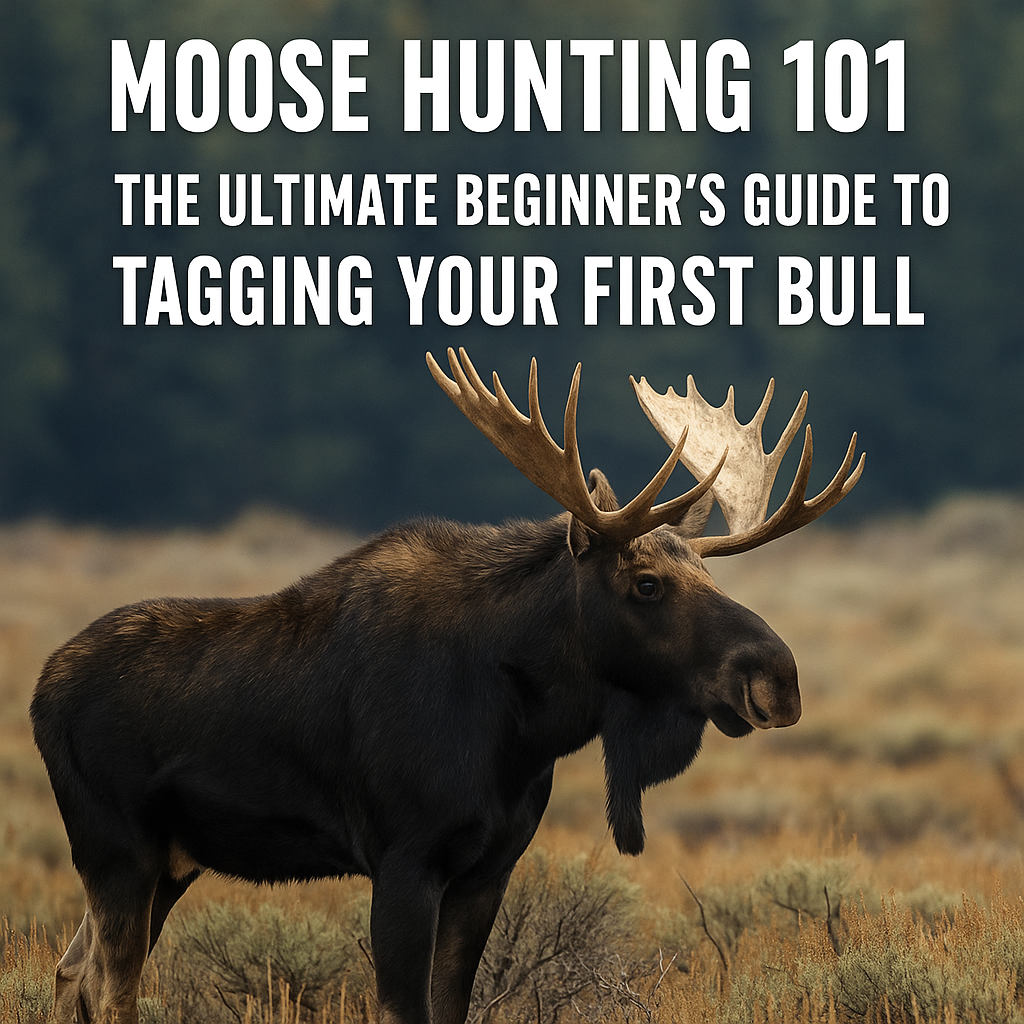
Moose Hunting 101: The Ultimate Beginner’s Guide to Tagging Your First Bull
So you want to hunt moose. Good choice. It’s one of the great North American hunting experiences: big country, the rut, calling a bull into close range, and a freezer full of the best wild meat there is. But it’s also a hunt that rewards preparation more than almost any other. This guide gives you the full picture, start to finish.
First, Understand What You’re Getting Into
Moose hunting is not like deer hunting with bigger antlers. Three things make it different:
The tag comes first, sometimes years first. In most of the best moose country, you can’t just buy a tag. You’ll apply to draws and lotteries, build preference points, and plan years ahead. Read our Moose Hunting Regulations Across North America guide before anything else. Picking your jurisdiction is step one.
The animal is enormous. A mature bull weighs 1,000 to 1,600 pounds. Everything about the hunt scales up: the cartridge, the pack out, the meat care. Respect that from the start.
The country is remote. The best moose hunting happens where the roads end. Logistics, weather, and physical preparation matter as much as shooting skill.
Where Should a Beginner Hunt?
Your first moose hunt should prioritize opportunity and learning over trophy potential:
- Newfoundland offers high moose density and outfitter-run hunts that remove the draw uncertainty. Expensive, but the simplest path to a first bull.
- Ontario and Quebec have accessible drive-to hunting with established outfitters and draw systems you can learn.
- Alaska offers over-the-counter harvest ticket hunts for residents and draw options for nonresidents, but the logistics are serious. Better as a second or third moose hunt unless you’re going guided.
- Maine’s lottery is worth entering every year from day one. You might wait a decade, but the points accumulate while you hunt elsewhere.
Avoid starting with once-in-a-lifetime draws in Wyoming or Colorado. Those tags deserve a hunter who’s already made their beginner mistakes somewhere else.
The Skills to Learn (In Order)
1. How the tag system works. Draws, points, deadlines. This is unglamorous and absolutely critical. Miss a deadline and you lose a year.
2. Calling. Moose are the most callable big game in North America, and calling is the skill that most directly produces close encounters. Our Complete Guide to Moose Calling covers the sounds, the setup, and the sequences.
3. Shooting under field conditions. Practice from field positions (kneeling, sitting, off shooting sticks), not just the bench. Practice in your hunting clothes. Know your maximum confident range and stay inside it.
4. Navigation and woodsmanship. Reading sign, understanding wind, moving quietly. These compound over every hunt you ever do.
5. Meat care. A moose is a week of work after the shot. Learn game care before you need it, not during. See the game care section of our Gear Checklist.
Rifle and Gear Basics
You don’t need the most expensive setup. You need the right setup, which we’ve covered in detail:
- Best Moose Hunting Calibers & Rifles: the .30-06 with premium bullets remains the default answer.
- Best Rifle Scopes for Moose Hunting: modest magnification, good low-light glass, mounted properly.
- Ultimate Gear Checklist: everything to pack, from day hunts to fly-in expeditions.
The single best gear investment a beginner can make isn’t equipment at all: it’s ammunition and range time.
Beginner Mistakes to Avoid
- Applying nowhere. The hunters who kill bulls started applying for tags years ago. Enter every draw you can, every year, starting now.
- Overcalling. New callers call too much, too loud, too often. Less is more. Read the calling guide.
- Ignoring the wind. A bull will circle downwind. Plan for it or get busted by it.
- Underestimating the pack out. A moose is 500+ pounds of meat and bone. Have a real extraction plan before you pull the trigger: how many trips, who helps, where the meat goes tonight.
- Skipping the regulations. Every jurisdiction has quirks: antler restrictions, evidence-of-sex rules, meat salvage laws, party hunting limits. Violations are expensive and sometimes criminal. Read the actual rulebook.
- Hunting the opener like everyone else. If you can hunt midweek or later in the season, pressure drops and bulls get callable again.
What to Expect on Your First Hunt
Expect long days, hard work, and moments of doubt. Expect to be humbled by the country. And if you do the preparation, expect at least one morning where everything comes together: the frost, the call, the grunt answering out of the timber, and a bull walking in that makes every mile worth it.
Most first-time moose hunters don’t kill a bull. The ones who come back the next year, smarter and better prepared, usually do.
Your First-Year Action Plan
- This month: Read the regulations guide. Enter every draw and lottery you’re eligible for.
- This season: Practice calling. Shoot from field positions monthly. Get your gear list sorted.
- This year: Book a hunt, even a modest one. An accessible Ontario or Quebec hunt teaches more than five years of reading.
- Every year after: Keep applying everywhere. Keep learning. The points and the experience compound together.
Welcome to moose hunting. Start with the tag, respect the animal, and enjoy every mile of it.